|
Botanical name |
Nymania capensis |
|
Other names |
Chinese lanterns; Klapperbos (Afrikaans) |
|
Family |
Meliaceae |
|
Dimensions |
An erect, evergreen shrub or small tree, usually around 3 m in height, but occasionally up to double that |
|
Description of stem |
Often multistemmed, older ones grey, younger ones light brown |
|
Description of leaves |
Simple, narrowly lanceolate, clustered or fascicled around the twig ends, otherwise alternate; green and leathery; petiole 2 mm, base tapering, apex rounded, margin entire |
|
Description of flowers |
The single axillary flowers are red or pink, tubular to bell-shaped, the floral parts occur in fours; they appear in winter |
|
Desciption of seed/fruit |
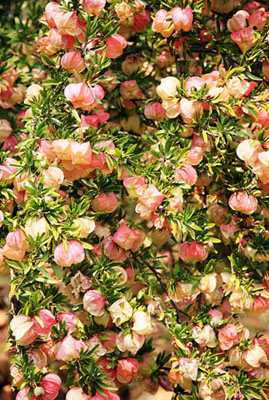
Puffed-up or balloon-like, papery seed capsules in four segments; strikingly colourful in cream, light rose to deep pink with a course texture; more flowery than the flowers; appear square from the top or bottom, round from the side; through spring and summer; the seeds are brown, pea-shaped |
|
Description of roots |
|
|
Variation |
Specimens from the Richtersveld are said to have brighter red flowers |
|
Propagation and cultivation |
Grows easily from seed, not from cuttings; does not survive much watering or high rainfall; take care upon transplantation of young plants not to upset the roots in any way |
|
Tolerances |
Very drought resistant, somewhat frost resistant |
|
Uses |
Attractive garden plant, but not common due to difficulties in achieving its survival in varying habitats |
|
Ecological rarity |
|
|
Pests and diseases |
|
|
Other |
|
|
Location |
Arid, stony scrub-veld in mainly (low) winter rainfall areas |
|
Distribution (SA provinces) |
Western Cape, Eastern Cape, Northern Cape |
|
Country |
South Africa, Namibia |