

Orobanche ramosa var. ramosa
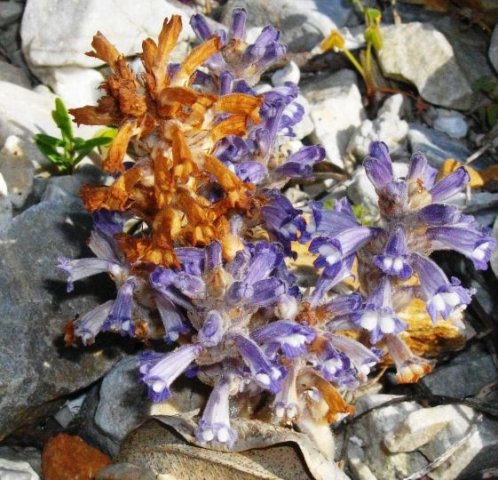
Author: Ivan Lätti
Photographer: Ivan Lätti
Orobanche ramosa var. ramosa is an exotic parasite that attaches itself underground to the roots of other plants. It then drains nutrients and moisture from these hosts, not possessing leaves containing chlorophyll for performing such functions independently. The plant may eventually strangle its host by depriving it of nutrients.
The generic name, Orobanche, is derived from the Greek words orobos meaning vetch (a genus of herbaceous, twining, leguminous plants), and anchein meaning to strangle or to throttle, referring to the hold these plants have on their hosts. A subsequent name change to Phelipanche ramosa may be official, but has not yet been adopted by SANBI.
Orobanche resembles Striga and other genera that do not contain any chlorophyll, called holoparasites. Some Orobanche species are annual, others biennial or perennial.
The plant is common near the Mediterranean, in North Africa, southern Europe and possibly Asia. It probably arrived in South Africa during the colonisation of the Cape, introduced by accident or spreading spontaneously.
In several parts of the world certain species of this genus, commonly known as broomrape or hemp broomrape have become agricultural pests, infesting crops like tomato, potato, tobacco and ornamental plants. It then understandably appears on several official lists of noxious or prohibited weeds combated in various parts of the world. It is unlikely to be threatened in nature in South Africa, although the SANBI Red List does not assess exotics (Visser, 1981; Andrew, 2017; iNaturalist; Wikipedia; http://fernkloof.com; http://plants.usda.gov; http://redlist.sanbi.org).