
Albums
Polygala virgata
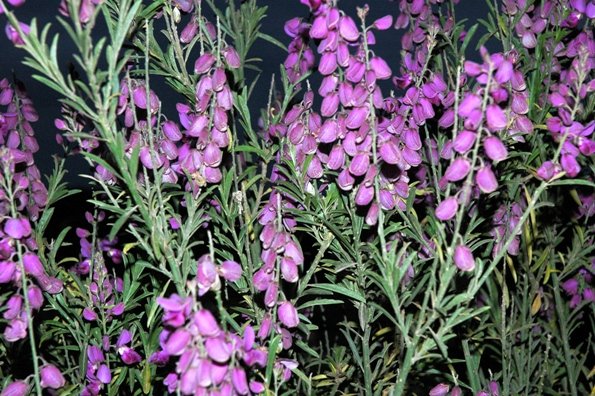
Author: Ivan Lätti
Photographer: Johan Wentzel
Polygala virgata, commonly known as purple broom or moth fruit, is a slender, erect, single stem (therefore reseeding) plant that reaches heights from 1,5 m to 2 m. The specific name, virgatus, is derived from the Latin word virga meaning a rod, referring to the rod-like growth habit.
The leaves are elliptic, sometimes very narrow and about 3 cm long. The plant retains leaves only near its top.
The flowers are produced in long, arching racemes. The pink-purple to dark purple flower has a conspicuous pair of lateral, inner sepals that spread like wings. The lower petal is keeled with a crest at its tip, the lateral petals often inconspicuous. The flowers are structurally different to the typical pea flowers that they superficially resemble.
The species distribution is widespread across South Africa apart from the dry northwest, found in all provinces except the Northern Cape, and further north in tropical Africa. This photo was taken near Kaapsche Hoop.
The habitat is widespread among shrubs, thicket, grassy fynbos and along forest margins. The habitat populations of all three the recognised varieties are deemed of least concern early in the twenty first century.
The striking flowers make the plant popular with gardeners (Euston-Brown and Kruger, 2023; Manning, 2009; iNaturalist; http://redlist.sanbi.org).