
Albums
Leucadendron argenteum
Author: Ivan Lätti
Photographer: Ivan Lätti
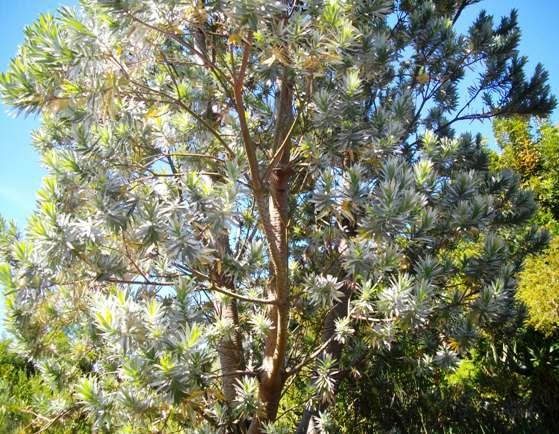
Leucadendron argenteum, commonly the silver tree, in Afrikaans the silwerboom (silver tree), or in the more Dutch days witteboom (white tree), is a slender tree of about 6 m in height, occasionally 10 m (SA Tree List No. 77). The bark is smooth with distinctive leaf scars. The graceful tree is considered a treasure due to its looks, its limited presence in nature and its uncertain future.
The species distribution is restricted to parts of the Cape Peninsula, and a few areas near Somerset West, Paarl and Stellenbosch, although those secondary stands beyond the Peninsula may be the result of planting in nature, for which energy existed at times in the past.
The habitat is gravelly, granitic, shale and clay soils, not the sandstone which is common in the region. The trees occur mainly on easterly and southerly slopes at elevations from 100 m to 150 m. The habitat population is deemed vulnerable early in the twenty first century, due to the large urban impact on the area. Fire and wind impact over time haven't proven to be main threats to this species. More than half the silver tree's natural distribution range has been lost to human development.
Another early Afrikaans common name for the tree, brandhout (fire wood), indicates how the tree numbers were reduced in olden times. The wood is soft and spongy, not utilitarian timber, and nothing to write home about as firewood either. It burns too fast with little lasting heat, but was available in a timber-poor environment in the old days at the Cape, probably particularly to poor people to whom cutting of the "better" trees was prohibited.
The silver tree can grow outside its natural geographic range. The tree is seen cultivated in many parts of South Africa, and have first been grown in England around 1693 (Coates Palgrave, 2002; iNaturalist; https://pza.sanbi.org; http://redlist.sanbi.org).